A Designer's Review of This Uterine Cancer Fighting Shirt Design
When an embroidery design lands in my library, I’m looking at it from a practical standpoint. My first question is always: how will this perform in a real project? Today, I’m evaluating This is My Uterine Cancer Fighting Shirt design, considering its potential not just as a graphic, but as a stitched, tangible piece.
The Immediate Mood and Message
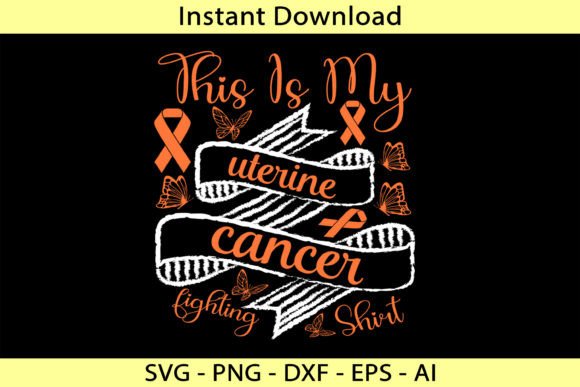
This design carries a weight of meaning. The phrase itself is bold and declarative, a statement of personal strength and advocacy. From a visual design perspective, the straightforward, clear typography is its primary feature. This isn’t a delicate, ornate piece; it’s direct. That clarity translates perfectly into embroidery. The mood it creates is one of empowerment and solidarity, making it inherently suited for products meant as gifts of support, personal reminders, or awareness items.
Where This Design Naturally Belongs
My mind immediately goes to comfort items and daily wearables. The design’s personality feels perfect for a cozy sweatshirt, a soft hoodie, or a sturdy tote bag—items someone would use regularly for comfort and statement. It could also be beautifully impactful on a pillow cover for a caregiver’s home or a simple, framed patch. Its power lies in its simplicity, so it doesn’t need a complex product to shine.
Performance in Real-Life Embroidery Scenarios
Let’s walk through a real case. Imagine I’m preparing a custom embroidered tote bag for a client who wants to gift it to a friend undergoing treatment. Using This is My Uterine Cancer Fighting Shirt as the central motif, I’m thinking about execution.
The clean lettering means satin stitches for the text would likely be the go-to, offering a smooth, professional finish. On a tote bag’s canvas, the stitches would hold up well to use. On a sweatshirt, I’d consider a slightly lighter fill stitch density to maintain the fabric’s softness. For a baby item—perhaps a blanket for a supportive family—the design would need to be scaled appropriately, ensuring the lettering remains perfectly legible even when smaller.
- Custom Apparel: Works excellently on t-shirts, sweaters, and hoodies, especially in a central chest or upper back position.
- Home Goods: A pillow cover or tea towel with this embroidery turns a everyday object into a meaningful keepsake.
- Small Business Merchandise: For an Etsy seller or craft fair vendor focusing on supportive or awareness-themed products, this design is a ready-made asset for creating valued inventory.
- Personalized Gifts: Its heartfelt message makes it a prime candidate for holiday gifts, wedding gifts for close families, or any personalized product meant to show deep support.
Considerations for Careful Use
No design is universally perfect for every scenario. Here’s where a practical eye matters.
The main consideration with a text-based design like this is legibility. On highly textured fabrics, like some knit sweaters, small details in lettering can get lost. On stretchy fabric, proper stabilizer is non-negotiable to prevent distortion of the clear message. Embroidering on dark fabric requires a thoughtful thread color choice—a bright, contrasting color is key to maintaining the design’s bold impact.
For curved surfaces like caps, the layout needs to be tested; a long line of text might not adapt cleanly to the curve without adjustments. Also, if you’re thinking of very small hoop sizes for tiny items, you must check that the text scale remains readable. Dense stitch areas in the lettering could feel stiff on thin fabrics, so adjusting stitch density or using a lighter fill might be necessary.
Impact on Product Value and Customer Trust
When you stitch this design onto a product, you’re adding significant emotional value. The handmade presentation of an embroidered item, compared to a simple print, elevates it into a cherished object. For a small shop owner, using this design on well-made products (like a high-quality cotton sweatshirt) builds customer trust—it shows you’re offering a substantive, meaningful good, not just a generic slogan.
The design’s directness also aids in recognition and engagement. A customer browsing an online shop or a craft fair table will immediately understand the product’s purpose and sentiment. This clarity boosts its giftability and professional feel, as the message is unambiguous and respectfully presented.
Practical Notes for Embroidery Designers
Before you commit this design to a final project, here’s my standard checklist.
- Always test on scrap fabric first. Use the same material you plan for the final product. This reveals how the stitch density interacts with the fabric weight and texture.
- Check thread color contrast. Run a simple black-and-white mockup on your software to see the value contrast. Then, test actual thread swatches against your light or dark background fabric.
- Inspect the small details. Even in clear text, check corners and tight curves in the lettering to ensure your machine’s stitch path will be clean.
- Confirm your hoop size can accommodate the design at your desired scale, especially if you’re adding it to a larger item like a blanket or apron.
- Use the proper stabilizer. This is critical for maintaining the design’s integrity on stretchy, thin, or textured fabrics.
- Most importantly, confirm the licensing. Since this is a digital embroidery file, you must understand the terms before selling finished items or using it in commercial embroidery projects for clients. Does it allow for resale of physical products? Always verify.
In conclusion, This is My Uterine Cancer Fighting Shirt design is a powerful, straightforward asset for embroidery designers and makers. Its strength is its clear message, which translates reliably into stitchwork. It’s suited for projects where meaning and clarity are paramount. By applying these practical considerations—testing, adapting to your substrate, and respecting licensing—you can turn this digital graphic into a finished product that carries real weight and comfort for your clients or for your own craft business.