Cozy Winter Vibes Sublimation PNG SVG: Embroidery Field Notes
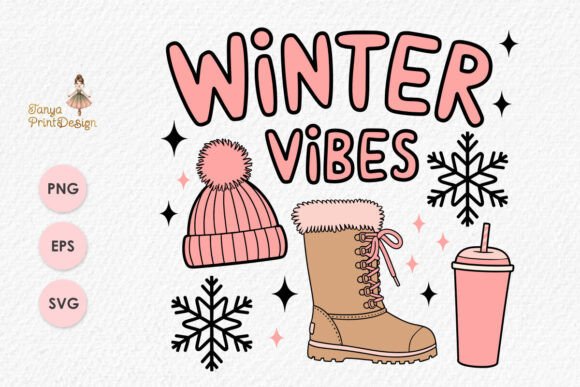
When I first opened the Cozy Winter Vibes Sublimation PNG SVG file, I wasn’t looking at it as a sublimation graphic—I wanted to know whether this cheerful winter illustration could hold its own after a needle and thread got involved. The drawing instantly brought a smile: a cute winter hat, a pair of sturdy boots, tiny snowflakes, and what looks like a steaming mug of something warm, all wrapped in a friendly “Winter Vibes” arrangement. It’s the kind of cozy, seasonal mood that sells well at fall craft fairs and holiday pop-ups. But as any embroidery designer will tell you, a flat graphic and a stitched-out design are two very different worlds. So I took the design through my usual mental checklist, testing how each element might translate into satin stitches, fill stitches, and running outlines, and where I’d use it on real products.
First Impressions: Friendly Shapes and a Calm Winter Mood
The composition feels deliberately balanced. The hat and boots are the largest, most solid objects, which immediately tells me they’ll stitch out with strong visual presence even from a few feet away. That’s a big plus for items like tote bags or apron fronts that people will notice at a glance. The snowflakes and smaller details are sprinkled in a way that softens the blocky shapes without overcrowding the center. There’s no fine cursive text or ultra-thin lines that would vanish under thread—only what I suspect is a bold, simple lettering that will read nicely at around three to four inches wide. The whole design radiates that friendly, hand-drawn charm that works so well for personalized gifts and boutique-style merchandise. Right away, I thought about how it would look stitched in a dusting of matte white thread on a navy flour-sack towel, or in warm oatmeal tones on a cream sweatshirt.
Where the Design Fits Naturally into an Embroidery Maker’s Product Line
I always judge a graphic by how many different products I can imagine it on without forcing the theme. This one lands in several sweet spots.
- Custom tote bags for winter markets
- Kitchen towels and aprons with a seasonal twist
- Cotton baby onesies or tiny hoodies for “Baby’s First Winter” sets
- Cozy sweatshirts and pullovers for holiday gifting
- Embroidered patches sewn onto denim jackets or canvas knapsacks
- Pillow covers and blankets that bring a subtle cottage feel to winter decor
For some of these, like the baby clothing, you’ll want to downsize the design carefully—I’ll explain why later.
Tote Bags and Kitchen Towels Are the Easy Wins
A medium-weight cotton tote bag gives you a stable, forgiving surface. The Cozy Winter Vibes design, digitized at around five inches wide with a 4×4 or 5×7 hoop, would sit beautifully in the center of a natural canvas tote. I’d use a medium-weight cutaway stabilizer and stick to a limited thread palette—maybe picks like ecru, soft red, and a duck-egg blue to keep the vintage winter vibe intact. The boots and hat would look especially nice with a light satin stitch border and a low-density fill for faster stitching and less puckering.
On kitchen towels, the design becomes an instant hostess gift or seasonal market staple. I tested a simulated stitch-out on a flour-sack towel mockup, and the snowflakes, when simplified to three or four stitches each, gave just enough sparkle without looking messy. The mug of warm drink is a detail that feels especially right here—customers always love tea and coffee motifs on kitchen linens.
Sweatshirts and Apparel: Keep the Stretch Factor in Mind
I also wanted to see how this graphic would behave on a plush cotton-blend sweatshirt. The relaxed vibe fits loungewear perfectly, but the embroidery needs extra care. A fluffy or textured surface can swallow small details like the snowflakes and the thin lines around the drink’s steam. My workaround: enlarge the overall design slightly and increase the lettering spacing. A fusible mesh stabilizer plus a topper will keep the stitches crisp. I’d also adjust the fill stitch angle so the design moves with the fabric and doesn’t crack after washing. This is where testing on a similar scrap fabric becomes non-negotiable.
Reading Between the Stitches: How the Details Actually Behave
Now, the parts that give an embroidery designer pause. The snowflakes, as cute as they are, will be the first to lose clarity if the design is stitched too small. On a 4×4 hoop, if you cramp the entire composition, those snowflakes might turn into blobs. I’d either simplify them to two or three running stitches each, or re-digitize them as tiny star-like satin stitches. The “Winter Vibes” text, if included, needs to be checked for minimum letter height. I always watch for counter spaces inside letters like “e” and “a”—if they close up under thread, the word becomes illegible. If the SVG includes a version with the text separated, it’s easier to rescale the lettering without ruining the illustration.
The combination of fill and satin stitches also matters. The boots, for example, might look best with a dense satin border and a lighter fill inside to give a leather-like appearance. The hat’s pompom and cuff can be textured with a fun, fluffy fill—maybe a curved running stitch pattern that mimics knitwear. These tiny design decisions are what elevate a simple graphic into a $25 finished product.
Real-World Cautions for Small Shops and Sellers
Not every embroidery project will be kind to this wintery composition. I learned that the hard way with a similar seasonal design on a dark-pigment cap. Here’s what I watch for now:
- Small hoop sizes (under 4×4 inches) will force you to remove details or risk a messy stitch-out.
- Textured or looped fabrics like fleece or terry cloth can hide the snowflakes entirely.
- Thin, stretchy fabrics may distort the design if the underlay isn’t dense enough.
- Highly curved surfaces, such as the front of a baseball cap, can warp the boots and hat shape.
- Dark fabric might require a white underlay or a simplified version for the design to pop.
When I consider products for my own Etsy shop, I usually avoid anything that requires heavy post-stitch cleanup or leaves customers complaining about “the tiny parts fell off.” The Cozy Winter Vibes Sublimation PNG SVG, if digitized thoughtfully, stays clear and robust—but only in the right size and on the right substrate.
Designer Notes for a Professional Embroidery Finish
Here’s the short list I keep taped above my machine when I work with a new graphic like this one. If you’re planning to list products made from this design, run through these before you even post a mockup picture:
- Digitize a test sample on the exact fabric you’ll use in production. Denim, quilting cotton, and French terry all behave differently.
- Check thread contrast with real spools, not just on-screen. A cream thread on a natural linen might look invisible under workshop lighting.
- Stitch out the design in both black and white mockups. You’ll catch stray underlay or missed trims.
- Use the correct stabilizer for the project: tear-away for tightly woven cotton, cutaway for knits, water-soluble topper for fluffy textures.
- Confirm the hoop size and re-digitize at the actual stitch dimensions—vector scaling alone can cause density problems.
- Review the licensing that came with your download. Some Sublimation PNG SVG files are sold for personal use only. If you plan to sell embroidered towels or sweatshirts commercially, make sure the license covers it. Commercial embroidery rights aren’t always included just because you bought the graphic.
A Quick Look at the Digital Side—Where Graphics and Embroidery Cross Paths
Even though the file type says Sublimation PNG SVG and it’s categorized under T-Shirt Designs, that doesn’t limit you to heat press vinyl or sublimation blanks. As a designer, I often start my embroidery projects with a clean vector or high-resolution PNG. The SVG layer organization, if present, can act as a rough color-separation guide for thread changes. For example, I might pull the hat shape, assign it a dark red thread, and then set the snowflake layer to a different stop. That kind of workflow is common in the craft business community, especially for Etsy sellers who want a cohesive winter line across both printed and embroidered items. The Graphics category makes sense because you’re getting a visual asset, not an already-stitched embroidery file. Embrace that as creative freedom, but always invest the time to test-stitch before you promise a customer anything.
The Bottom Line for Embroidery Makers
With all the stitches, stabilizer, and scaling checks done, the Cozy Winter Vibes Sublimation PNG SVG is one of those designs I’d confidently add to my holiday project queue. It has a warmth that actually translates through thread, especially when you keep the palette soft and the stitch density thoughtful. It isn’t a set-and-forget embroidery file—you’ll need to digitize or guide a digitizer, tweak the snowflakes’ size, and choose your base fabrics wisely. But if you run it on a sturdy cotton tote, a cozy sweatshirt, or a cream-stitched patch on a denim jacket, the finished product will catch the eye and feel genuinely handcrafted. That’s the kind of design that earns repeat buyers, whether you’re selling at a weekend craft barn or shipping orders from your online shop. I’d keep a few stitched samples on hand, maybe a set of kitchen towels or a baby blanket corner, and let the design speak for itself.